
Year after year, we follow recipes. But do you actually know the part each ingredient plays in the recipe?
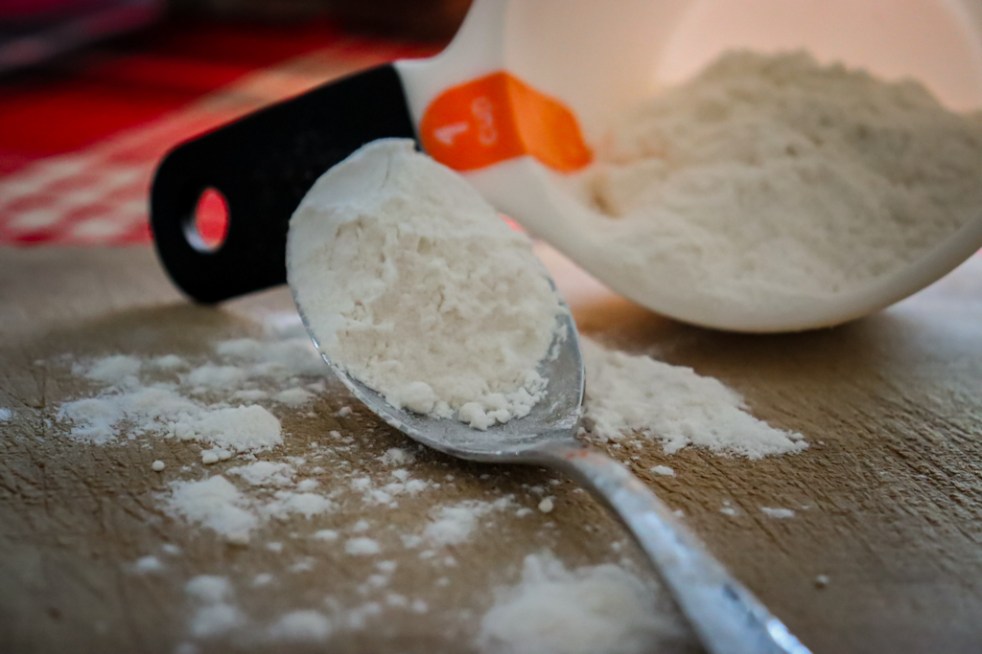
FLOUR is one of the most important ingredients in baking. It creates structure, the rise we all cross our fingers to see in the finished product. Flour contains proteins that interact with each other when mixed with liquid, to form gluten. When baked, the gluten network stretches to contain the leavening gasses. Store flour in a cool dry place away from any moisture that it can absorb.
All-Purpose flour is the most widely used flour. It is made by grinding down the grains endosperm. It has a moderate protein content of 10 – 11% which works really well in most baking recipes including cake recipes that require extra structure. Chocolate cake, should be always made with all purpose flour because chocolate contains tenderizers, so you need the extra structure that all purpose provides.
Cake flour is generally called for in delicate cakes such as angle food cake, and pound cake. It produces a soft and tender crumb. Cake flour has a low protein content of 6 – 8%. If you don’t have cake flour on hand you can “create it” by mixing cornstarch with all purpose flour. For each cup of all purpose flour, use 7/8 cup of all purpose flour mixed with 2 tablespoons of cornstarch.
Whole Wheat flour has a distinct texture because it is ground down from the entire wheat berry. (Bran, endosperm, and germ) Whole wheat flour has a high protein content of about 13% which results in a denser baked good. Whole wheat flour has a short shelf life between 3-9 months so it should be stored in a cool dark place. (such as a basement cold room)
Bread Flour is mainly used for – you guessed it, Bread! It has a high protein content of 12% – 14% It sometimes contains ascorbic acid which increases the volume and creates better texture of your loaf.
Butter gives baking that satisfying rich flavor. It also helps determine the texture. The more fat you add; the more tender your baked goods will be. often recipes call for unsalted butter as salt content can vary between brands. By using unsalted butter in recipes, you will have more control in how much salt goes in. Salted butter also contains more moisture than unsalted butter which can affect gluten development. If you don’t have unsalted butter on hand you can substitute with salted butter but be sure to omit 1/4 teaspoon of salt from the recipe for every 1/2 cup of salted butter. Butter should not be stored in the refrigerator for long periods of time as it can pick up other odors and flavors. If storing for a longer period of time; place butter in a ziplock bag and store it in the freezer.
Shortening is a flavorless fat and has a higher melting point than butter. Shortening prevents the formation of gluten which gives you a flaky product which is why it is more often used in pastry.
Molasses is a thick, dark syrup that is a by-product of refining sugarcane. It adds moisture and sweetness. It comes in light, dark, and blackstrap. Fancy molasses is a light variety which is sweet making it a good choice for baking. Molasses sweetness decreases as color darkens. Store in a cool dark pantry.
Maple Syrup is made by boiling down sap from maple trees. It is used as a sweetener. Maple syrup has high moisture content, so it should be stored in the refrigerator to prevent bacteria growth.
Honey is made by honey bees and mechanically filtered to remove debris. Like maple syrup, it is used as a sweetener. Honeys color indicates the depth of flavor with lighter shades being more mellow, and darker shades being more rich. Honey will crystalize in the refrigerator, so store it in the pantry.
MILK helps with gluten development. It interacts with flour allowing the proteins of wheat from the flour to interconnect into the gluten. It also adds moisture. Most baking recipes call for whole milk. Whole milk adds more moisture due to the fat content being greater than that of 2%, 1%, or skim. (However, I must admit I often use 2% milk, and my cakes still come out moist every time)
BUTTERMILK adds texture and tenderizes. When combined with baking soda, the two interact to create fluffiness. If you don’t have buttermilk on hand, you can “create it” by combining 1 tablespoon of lemon juice or white vinegar with milk and let it sit for 5 minutes.
BAKING SODA is used as a leveling agent. It is an alkali and must be used in conjunction with an acidic ingredient such as buttermilk, apple sauce, sour cream, vinegar, lemon juice, brown sugar, molasses in order to produce carbon dioxide. When using baking soda, it’s important to know that these chemical reactions start to occur as soon as the acid comes into contact with baking soda. Therefore, you should bake immediately after mixing. Baking soda also contributes to browning of our baked goods. Store in a cool dry place away from any moisture that it can absorb. If unopened, baking soda should be good for about two years; if opened, you should toss after about six months. You can test baking soda to see if it’s still potent by tossing a spoonful of baking soda in a bowl with a little vinegar or lemon juice. If the mixture starts fizzing, it means the baking soda is still good to use.
BAKING POWDER is also used as a leveling agent. It contains baking soda, an acid and a dried starch that acts as a filler (which means you do not have to worry about adding an acid like buttermilk or lemon juice) Baking powder also contains cornstarch which prevents the premature production of gas, and absorbs moisture. Baking powder works when it comes in contact with first a liquid and second heat. The great part about doughs or batters made with baking powder is that you can prepare them in advance. Store in a cool dry place away from any moisture that it can absorb. You can test baking powder by tossing a spoonful of baking powder in a bowl with hot water. If the mixture starts fizzing, it means the baking powder is still good to use.
Using baking powder and baking soda together in a recipe can give you more control over rise and alkalinity of the batter. If batter with baking powder is highly acidic, we add baking soda as extra support so the powered isn’t naturalized and deactivated.

EGGS are essential. They thicken, bind and emulsify the batter. It is best to use room temperature eggs as using cold eggs may increase bake times. It is especially important when baking delicate cakes to use room temperature eggs which relies on air to be incorporated into beaten eggs.
SUGAR is used in addition to creating sweetness. It affects moisture and crumb of baked goods. Sugar incorporates well with butter, aerating and creating air bubbles when creaming. Brown sugar is white sugar with added molasses giving it a deep rich flavor. If you don’t have brown sugar on hand, you can “create it” by adding 1 tablespoon of molasses into 1 cup of white sugar; adding an additional tablespoon of molasses will create a darker brown sugar. Brown sugar also provides moisture.
CONFECTIONERS’ SUGAR is finely ground white sugar. It is commonly used in frosting and glazes as it goes undetected in raw applications. If you don’t have Confectioners’ sugar on hand you can “create it” by processing 1 cup of white sugar with 1 tablespoon of cornstarch in a blender until it resembles powder. (Usually less than 1 minute)

 Prairie Sweets & Eats